

The Frustration of a Fading Hot Water Flow
Low hot water pressure can turn your morning routine into a frustrating ordeal. Whether it’s standing under a weak shower stream or waiting forever for hot water to fill your kitchen sink, this common plumbing problem affects everything from your daily comfort to simple household tasks.
Quick Diagnosis Guide for Low Hot Water Pressure:
- Check if it’s one fixture or whole house – Test hot water at multiple taps
- Compare hot vs. cold pressure – If only hot water is weak, it’s likely your water heater
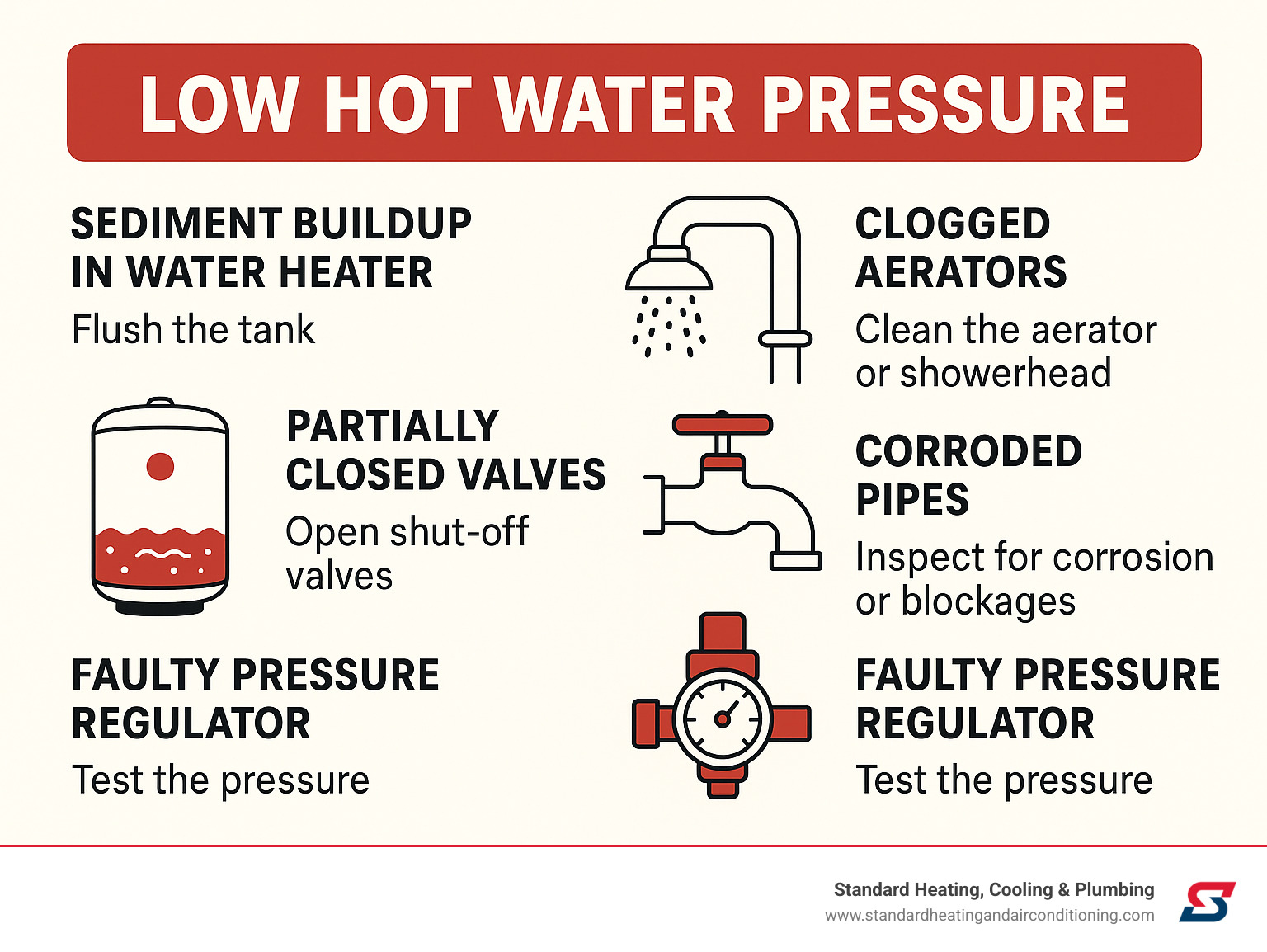
- Look for these common causes:
- Sediment buildup in water heater tank
- Clogged faucet aerators or showerheads
- Partially closed shut-off valves
- Corroded or blocked pipes
- Faulty pressure regulator
Normal water pressure ranges from 45-80 PSI. Anything below 45 PSI indicates a problem that needs attention.
The good news? Many causes of low hot water pressure have simple solutions you can try yourself. From cleaning mineral deposits off your showerhead to checking that your water heater’s shut-off valve is fully open, basic troubleshooting can often restore your water flow.
However, some issues – like sediment buildup in your water heater or corroded galvanized pipes – require professional expertise to fix safely and effectively.
Step 1: Diagnosing the Problem – Where is the Pressure Loss?
Before you can fix low hot water pressure, you need to play detective and figure out exactly where the problem is hiding. Think of it like troubleshooting a mystery – the clues you gather in these first few minutes will save you hours of frustration later.
The key question you need to answer is simple: Is this a whole-house problem or just one stubborn fixture acting up?
One Fixture vs. The Whole House
Start your investigation by taking a quick tour of your home’s water fixtures. Turn on the hot water at your shower first, then head to the kitchen sink, and finish at a bathroom faucet. You’re looking for patterns here.
Pay close attention to how the hot water flow compares to the cold water at each spot. This comparison is absolutely crucial for your diagnosis.
If your cold water gushes out strong but the hot water barely trickles, you’ve found your smoking gun – the problem is definitely in your hot water system. On the other hand, if both hot and cold water are weak throughout your entire house, you’re likely dealing with a main water supply issue or a faulty pressure regulator.
Here’s a real-world example: Let’s say you’re getting low hot water pressure in your shower, but the cold water runs perfectly fine. That tells you the issue is probably sediment in your water heater or a blocked hot water line. But if both hot and cold water are weak only in that shower, you’re probably looking at a clogged showerhead – a much easier fix!
When all your hot water taps are affected but cold water runs normally, your water heater is almost certainly the culprit. This could mean sediment buildup, a failing component, or issues with your hot water supply lines.
Testing Your Home’s Water Pressure
Once you’ve mapped out which fixtures are affected, it’s time to get some hard numbers. A water pressure gauge will give you the exact PSI reading you need to understand what’s really going on.
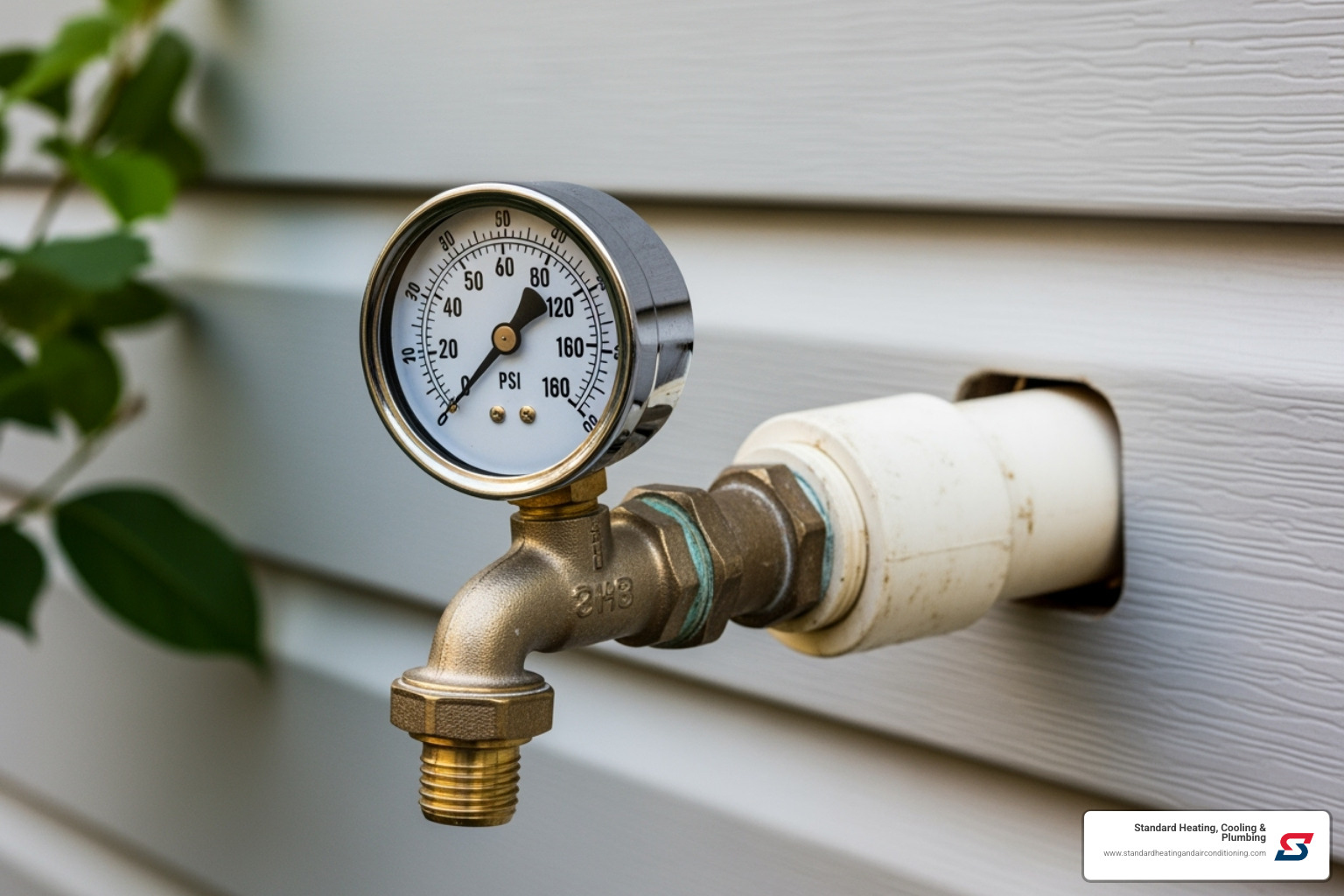
Head outside and attach your pressure gauge to an outdoor spigot – preferably one that’s closest to where your main water line enters your home. Make sure all other faucets and appliances in your house are turned off to get the most accurate reading.
Normal water pressure should read between 45 and 80 PSI. If your gauge shows anything below 45 PSI, you’ve confirmed that low water pressure is contributing to your hot water woes. Readings above 80 PSI indicate high pressure, which can actually damage your plumbing over time.
This PSI reading helps you understand whether you’re dealing with a whole-house water supply problem or if the issue is specifically within your hot water system. If your overall pressure is fine but you still have low hot water pressure, you know the problem lies somewhere between your water heater and your faucets.
Armed with this diagnostic information, you’re ready to dive deeper into the specific causes and solutions for your hot water pressure problems.
Common Culprits Behind Low Hot Water Pressure
Now that we’ve diagnosed whether your low hot water pressure is a localized or whole-house issue, let’s explore the most common reasons why your hot water isn’t flowing like it should. Think of this as detective work – each clue helps us get closer to restoring that satisfying shower experience you’ve been missing.
Sediment Buildup: The #1 Enemy of Water Heaters
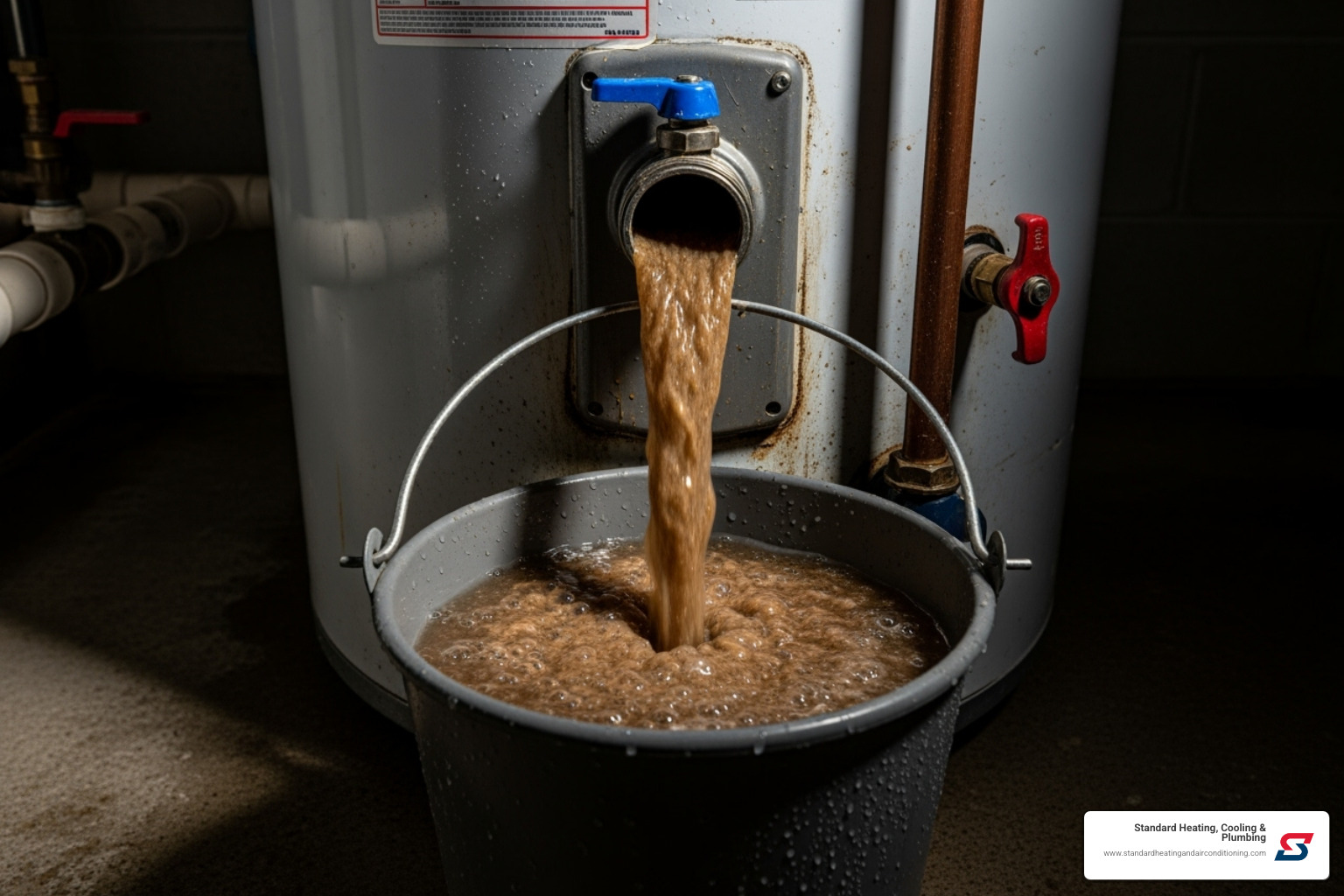
If there’s one villain in the low hot water pressure story, it’s sediment buildup in your water heater tank. This sneaky troublemaker is especially common here in Birmingham, where hard water carries plenty of minerals like calcium and magnesium.
Here’s what happens: those minerals don’t just disappear when water gets heated. Instead, they settle at the bottom of your tank like unwanted guests who refuse to leave. Over time, this sediment layer grows thicker and starts causing real problems.
The telltale signs of sediment buildup include that annoying popping or knocking sound coming from your water heater – that’s the sound of water trying to bubble up through the mineral layer. You might also notice your energy bills creeping up, since your water heater has to work much harder to do its job.
Most importantly for our discussion, this sediment can block the hot water outlet or clog heating elements, creating a bottleneck that restricts water flow. It’s like trying to drink a milkshake through a straw that’s partially blocked – frustrating and ineffective.
The solution? Regular water heater flushing removes this buildup and can dramatically improve your hot water pressure. We recommend annual flushing, especially in hard water areas. During this process, we also check important components like the anode rod, which acts like a bodyguard for your tank, attracting corrosive elements before they can damage the tank walls.
Water Heater Component Failures
Sometimes the problem goes deeper than sediment. Your water heater has several components that can fail over time, each potentially contributing to low hot water pressure.
The dip tube might sound like something you’d find at a party, but it’s actually a crucial plastic pipe that extends from the cold water inlet down to the bottom of your tank. When it breaks or cracks, cold water mixes with hot water at the top, creating lukewarm disappointment and reduced pressure.
Heat traps are small devices designed to prevent heat loss from your water heater. While they’re great for efficiency, they can become clogged with debris or mineral deposits, creating a roadblock for your hot water flow.
Thermostat problems can also play a role. While they primarily affect water temperature, a malfunctioning thermostat can lead to insufficient heating, which means your hot water runs out faster and pressure drops sooner.
For those with tankless water heaters, there’s a unique challenge: these units need a minimum flow rate to even turn on. If your fixture has very low flow, the heater might not activate at all, leaving you with no hot water pressure whatsoever.
That water heaters typically last 8-12 years. If yours is getting up there in age, component failures become more likely, making regular maintenance even more important.
Blockages and Restrictions in Your Plumbing
Sometimes your water heater is working perfectly, but other parts of your plumbing system are causing the low hot water pressure headache.
Clogged aerators and showerheads are often the easiest fixes. These components are like tiny filters that can accumulate mineral deposits, dirt, and debris over time. If your pressure problem is isolated to one fixture, this is your most likely culprit. The good news? A simple vinegar soak can often dissolve the buildup and restore proper flow.
Partially closed shut-off valves are another common cause – and honestly, we’ve all been there. Whether it’s the water heater shut-off valve on the cold water inlet line, the under-sink valves for individual fixtures, or even the main water shut-off valve, a partially closed valve acts like a partially blocked highway during rush hour.
Kinked supply lines can happen when appliances get moved or during installation work. These flexible lines connecting your fixtures to the main pipes can get bent or twisted, restricting hot water flow to that specific area.
Pipe corrosion and blockages represent a more serious issue, especially in older homes. Galvanized steel pipes, common in homes built decades ago, have a lifespan of about 40-50 years. As they age, rust and mineral deposits build up on the inside walls, gradually reducing the pipe’s internal diameter. It’s like trying to breathe through a straw that’s slowly getting narrower.
Copper pipes last around 50 years, while brass pipes can go up to 70 years, but they too can experience mineral buildup in hard water areas. If you’ve noticed a gradual decrease in pressure over months or years, aging pipes might be the culprit.
A malfunctioning pressure regulator can cause sudden, dramatic drops in water pressure throughout your entire home. This device, typically installed where your main water line enters your home, is supposed to reduce high municipal water pressure to safe levels (usually 60-80 PSI). When it fails, it can turn your once-powerful hot water flow into a disappointing trickle.
The key is identifying which of these culprits is causing your specific low hot water pressure problem. Some fixes are simple weekend projects, while others require professional expertise to resolve safely and effectively.
Your DIY Troubleshooting Checklist
Before throwing in the towel and calling for professional help, there’s actually quite a bit you can do on your own to tackle low hot water pressure. Many of these fixes are surprisingly simple – the kind that make you wonder why you didn’t try them sooner!
A DIY Checklist for Low Hot Water Pressure
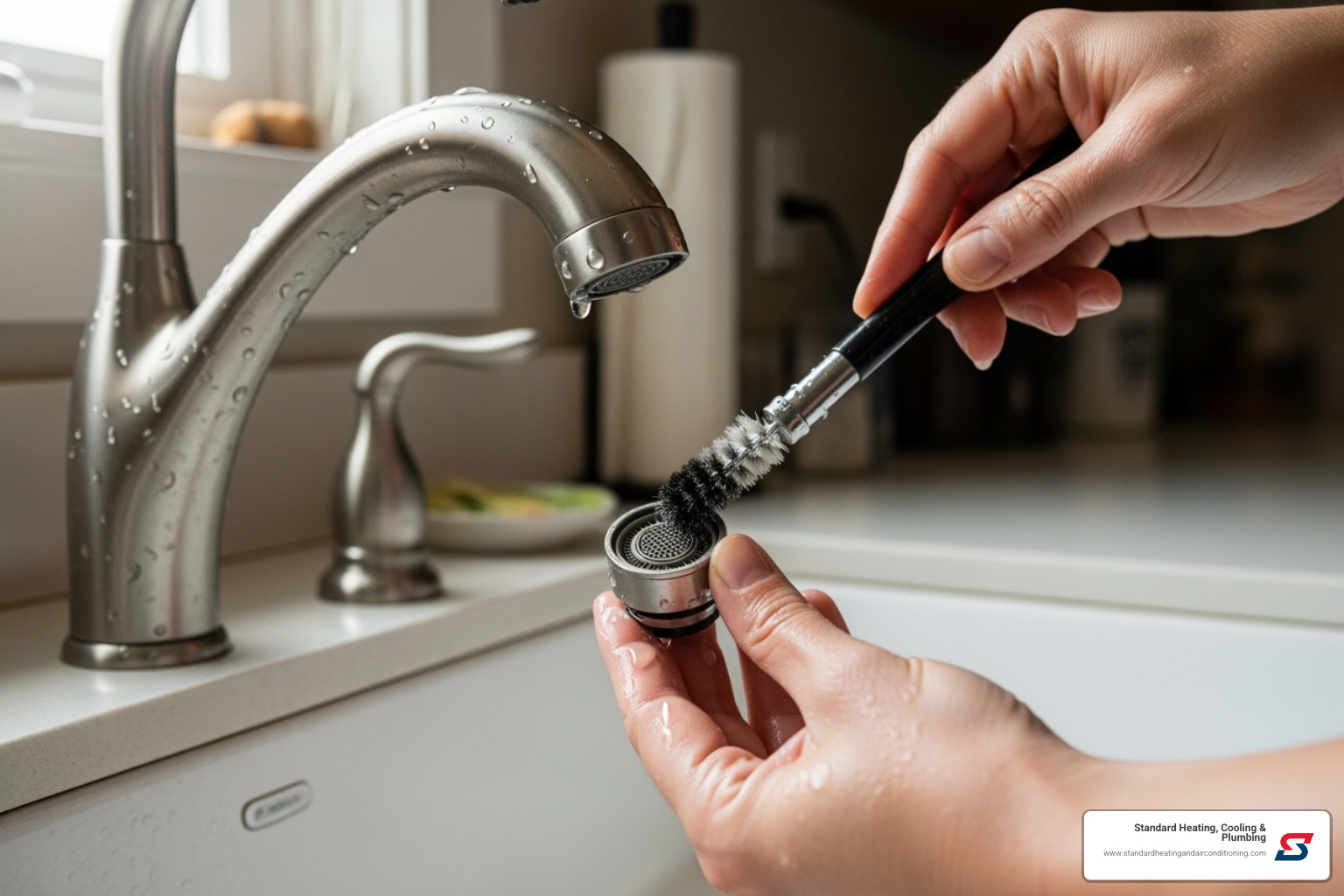
Let’s start with the easiest wins. Cleaning your faucet aerators is hands-down the simplest fix you can try. These little screens at the tip of your faucets are magnets for mineral deposits and debris. Simply unscrew the aerator, soak it in white vinegar for a few hours (overnight works even better), give it a gentle scrub with an old toothbrush, and screw it back on. You’d be amazed how often this alone solves the problem.
Descaling your showerheads follows the same principle. You can either remove the showerhead entirely or use the clever plastic bag trick – fill a bag with vinegar, secure it around the showerhead with a rubber band so it’s completely submerged, and let it work its magic overnight. Just remember to run the water for a minute before your next shower to clear out any vinegar residue.
Next, it’s time to play detective with your shut-off valves. Start under your sinks – those hot water supply valves should be turned fully counterclockwise. It’s surprisingly common for these to get partially closed during cleaning or maintenance and then forgotten about. Don’t forget to check your water heater’s shut-off valve too. This one’s on the cold water line going into your heater, and if it’s even slightly closed, it’ll restrict flow throughout your entire hot water system.
Your main water shut-off valve deserves attention as well. Usually located near your water meter, this valve controls your entire home’s water supply. Make sure it’s completely open, but here’s a pro tip: once it’s fully open, turn it back just a quarter-turn to prevent it from seizing in the future.
Inspecting for kinked supply lines is another quick check. Those flexible lines connecting to your washing machine, dishwasher, and individual fixtures can get twisted during installation or when appliances are moved. A simple straightening might be all you need.
Finally, take a moment to look for visible leaks around your water heater, pipes, and fixtures. Even small drips can impact pressure over time, and a significant leak in your hot water line will definitely affect your low hot water pressure. If your water meter keeps spinning even when no one’s using water, that’s a telltale sign of a hidden leak.
When to Call a Professional Plumber
While we love a good DIY success story, some situations definitely call for professional expertise. Knowing when to make that call can save you from turning a manageable problem into an expensive disaster.
Persistent issues after trying all the DIY steps above are your first red flag. If you’ve cleaned, checked, and adjusted everything you can reach and you’re still dealing with low hot water pressure, there’s likely a deeper problem that needs professional diagnosis.
Suspected pipe leaks require immediate professional attention. We’re talking about unexplained wet spots on walls or floors, water stains that seem to appear from nowhere, or that continuously spinning water meter we mentioned. Water damage can escalate quickly and cost thousands to repair, so don’t hesitate on this one.
If your home has corroded galvanized pipes – common in older Birmingham area homes – you’re looking at a job that requires real expertise. These pipes develop internal rust and mineral buildup over their 40-50 year lifespan, gradually choking off water flow. Replacing pipe sections involves specialized tools and knowledge that most homeowners simply don’t have.
Faulty pressure regulator issues are definitely in professional territory. These devices control the water pressure coming into your entire home, and tampering with them without proper training can create unsafe pressure levels or cause extensive damage to your plumbing system.
When it comes to water heater repairs beyond basic flushing, it’s time to call in the experts. Issues with internal components like dip tubes, heating elements, or tank leaks involve electrical or gas connections that can be dangerous to work with. Given that water heating accounts for significant energy use, a faulty unit can also drive up your utility costs substantially.
Most importantly, any safety concerns involving gas lines, electrical components, or significant water leaks warrant an immediate professional call. At Standard Heating, Cooling & Plumbing, we’ve been keeping Birmingham area families safe and comfortable for 85 years. Our experienced technicians have the advanced diagnostic tools and expertise to solve even the most stubborn low hot water pressure problems efficiently and safely.
Frequently Asked Questions
After helping countless Birmingham homeowners with their water pressure woes, we’ve noticed the same questions come up again and again. Here are the answers to the most common concerns about low hot water pressure.
Why is my hot water pressure low but the cold is fine?
This is probably the most telling clue you can get when diagnosing low hot water pressure – and it’s actually good news! When your cold water flows strong but your hot water trickles out, you’ve narrowed the problem down to your hot water system specifically.
The most likely culprit is sediment buildup in your water heater tank. Those minerals we talked about earlier love to settle at the bottom of your tank, and over time they can seriously restrict the hot water flowing out to your fixtures. It’s like trying to drink a milkshake through a straw that’s partially blocked.
Another common cause is a clogged hot water line somewhere between your water heater and the fixture. Hot water pipes are more prone to mineral buildup because heat actually accelerates the deposit process – think of how quickly your coffee pot gets that white buildup compared to a cold water pitcher.
Don’t overlook the simple stuff either. The water heater shut-off valve might not be fully open. This valve controls how much cold water can enter your tank to be heated, so if it’s only partially open, you’ll get reduced hot water flow throughout your home.
Sometimes faulty water heater components like a broken dip tube or clogged heat traps can create this exact scenario. The good news is that when only your hot water pressure is affected, you’re dealing with a more contained problem that’s often easier to fix.
Can a new faucet have low hot water pressure?
Oh, the irony! You just spent money on a shiny new faucet, expecting perfect water flow, only to find your hot water pressure is still disappointing. Unfortunately, this happens more often than you’d think.
Debris in the cartridge is surprisingly common with new installations. During the manufacturing process or when water first flows through the new faucet, tiny bits of debris, pipe dope, or even manufacturing residue can get lodged in the mixing cartridge inside your faucet handle. It’s like having a grain of sand in your shoe – small, but very noticeable.
Installation hiccups can also cause problems. A kinked supply line is easy to create when you’re working in the tight space under a sink. That flexible hot water line might look fine from the outside, but a small kink can dramatically reduce flow.
Here’s something that catches people off guard: your new faucet might actually be working perfectly, but it’s a low-flow model designed for water conservation. Modern fixtures often have flow restrictors that can make the water pressure feel weaker than what you’re used to. Check your faucet’s specifications – it might be doing exactly what it was designed to do.
If none of these seem to fit, there might have been an installation error. Sometimes connections aren’t quite right, or a component isn’t seated properly, creating an unintentional restriction.
How often should I flush my water heater?
Here’s a maintenance task that can make a huge difference in preventing low hot water pressure: flushing your water heater annually. Think of it as giving your water heater a good spring cleaning.
Once a year is the magic number for most homes, but if you live in an area with particularly hard water (and Birmingham definitely qualifies), you might want to consider doing it twice a year. Hard water means more minerals, and more minerals mean faster sediment buildup.
Regular flushing is like preventive medicine for your water heater. It prevents sediment buildup before it becomes a problem, maintains consistent hot water pressure by keeping those outlet pipes clear, and helps your water heater run more efficiently. When your water heater doesn’t have to work through a layer of mineral buildup, it heats water faster and uses less energy.
Here’s something that might surprise you: if your water heater is quite old and has never been flushed, there’s a small chance that disturbing all that settled sediment could cause issues. In very old tanks, sometimes the sediment is actually helping seal small leaks. If you’re unsure about your water heater’s condition, it’s worth having us take a look before attempting your first flush.
The process itself isn’t too complicated, but it does involve draining a large tank of hot water and working around gas or electrical connections, so many homeowners prefer to have professionals handle it during routine maintenance visits.
Restore Your Comfort with Reliable Hot Water Pressure
Nothing beats the satisfaction of a strong, hot shower to start your day or wash away the stress of a long evening. When low hot water pressure robs you of that simple pleasure, it affects more than just your comfort – it disrupts your entire routine.
The good news is that you now have a clear roadmap to tackle this frustrating problem. Whether your low hot water pressure is affecting just one fixture or your entire home, the key is proper diagnosis. Start by testing multiple faucets and comparing hot versus cold water flow. This simple step tells you whether you’re dealing with a water heater issue or a broader plumbing problem.
Many times, the solution is surprisingly simple. Cleaning clogged aerators, descaling your showerhead, or checking that all shut-off valves are fully open can restore your water pressure in just a few minutes. These DIY fixes work especially well when the problem is isolated to one fixture.
However, some issues require professional expertise to resolve safely and effectively. Sediment buildup in your water heater, corroded galvanized pipes, or a faulty pressure regulator are complex problems that need the right tools and experience to fix properly.
At Standard Heating, Cooling & Plumbing, we’ve been solving plumbing puzzles like yours for 85 years across Birmingham, AL, and surrounding communities including Alabaster, Chelsea, Homewood, and Vestavia Hills. Our family-owned business combines decades of experience with advanced technology to deliver reliable, affordable solutions that restore your comfort.
When your DIY efforts aren’t quite enough, or when you suspect a more serious underlying issue, our expert plumbers are ready to step in. We understand how important consistent hot water pressure is to your daily life, and we’re committed to getting your system running smoothly again.
Don’t let low hot water pressure continue to frustrate you and your family. Whether it’s a simple fix or a complex repair, we’re here to help you get back to enjoying those perfect, pressure-filled showers you deserve.
Schedule your water heater repair with us today, and let’s restore the reliable hot water flow your home needs.