

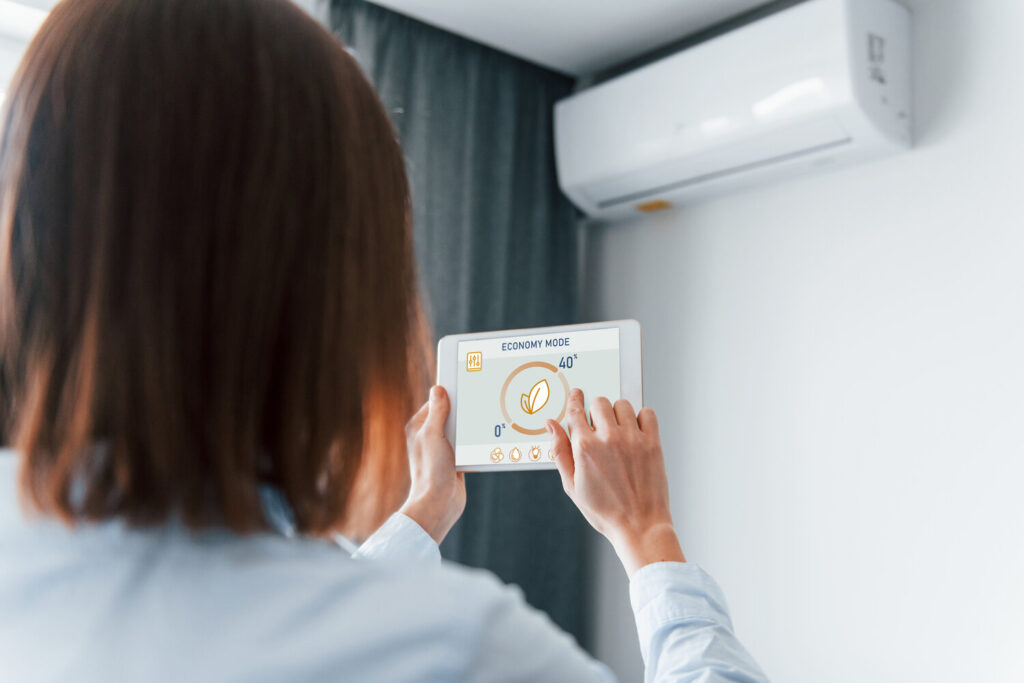
Indoor humidity can have a noticeable effect on how comfortable your home feels. Too much moisture can leave rooms feeling damp or clammy and contribute to condensation and moisture problems. Air that is too dry can contribute to static electricity and dry-feeling skin, eyes, nose, or throat.
For homeowners in Birmingham and throughout Central Alabama, humidity control can be especially important during warm, humid weather. While different rooms face different moisture challenges, that does not necessarily mean every room needs a different humidity setting. The goal is to maintain balanced whole-home humidity while paying closer attention to areas that naturally produce or collect more moisture.
What Is the Ideal Indoor Humidity Level?
For many homes, an indoor relative humidity range of approximately 30% to 50% provides a practical starting point. However, the appropriate level depends on outdoor conditions, indoor temperature, home construction, HVAC operation, and personal comfort.
Relative humidity changes with temperature, so one setting may not work equally well throughout the year.
Your home can also provide clues about whether adjustments are needed. Persistent condensation, damp surfaces, or musty odors can indicate excessive moisture, while static electricity and noticeably dry indoor conditions may suggest humidity is too low.
Should Every Room Have a Different Humidity Setting?
Most homes do not need a separate humidity target for every room.
Instead, aim for appropriate whole-home humidity while recognizing that some spaces naturally experience more moisture than others.
Bathrooms and kitchens produce moisture through showering and cooking. Basements and crawlspaces may be vulnerable to dampness because of cooler surfaces, drainage problems, or moisture intrusion. Bedrooms can also develop different conditions depending on airflow and occupancy.
Understanding these differences can help you manage each area without intentionally creating dramatically different humidity levels throughout your home.
Living Rooms and Common Areas
Living rooms and other frequently occupied spaces are good places to monitor your home’s general humidity.
If these rooms consistently feel clammy, smell musty, or develop condensation on windows, indoor humidity may be too high for current conditions. Excessive static electricity or persistently dry-feeling air may indicate that humidity is low.
Proper HVAC airflow also matters. Supply and return vents should remain unobstructed so conditioned air can circulate throughout the home.
Bedrooms
Bedrooms generally do not require a different humidity target from the rest of the home, but local conditions can vary.
Closed doors, limited airflow, multiple occupants, and portable humidifiers can all affect moisture levels. Condensation on bedroom windows may indicate that indoor humidity is too high relative to the outdoor temperature and window surface temperature.
Should You Use a Humidifier While Sleeping?
A humidifier may be useful when indoor air is genuinely dry, but more moisture is not automatically better.
Use a hygrometer to monitor humidity rather than operating a humidifier based only on how the air feels. Portable humidifiers should also be cleaned and maintained according to manufacturer instructions.
Adding too much moisture can contribute to condensation and create conditions where unwanted microbial growth may occur.
Bathrooms
Bathrooms naturally experience temporary increases in humidity during showers and baths.
The goal is not to maintain bathrooms at a higher humidity level. Instead, excess moisture should be removed after it is generated.
A properly functioning bathroom exhaust fan can help remove humid air. Ideally, the fan should exhaust outdoors rather than into an attic or other enclosed space.
Pay attention to:
- Persistent condensation
- Peeling paint
- Moisture staining
- Musty odors
- Damp surfaces that remain wet long after bathing
Recurring moisture problems may indicate inadequate ventilation, a plumbing leak, or another issue that needs attention.
Kitchens
Cooking can release substantial moisture into indoor air, particularly when boiling water or preparing food that generates steam.
An appropriately installed range hood that vents outdoors can help remove cooking moisture and other airborne contaminants.
Like bathrooms, kitchens do not need intentionally higher humidity. If condensation regularly develops on windows, walls, or other surfaces while cooking, ventilation may need improvement.
Basements and Crawlspaces
Basements and crawlspaces can present different humidity challenges because cooler surfaces may be more susceptible to condensation. Moisture can also enter through the ground, foundation, drainage problems, plumbing leaks, or outdoor air.
A dehumidifier may be appropriate in some situations, but it is important to identify the source of excessive moisture.
For example, a dehumidifier cannot repair a plumbing leak or solve exterior drainage problems. Addressing the underlying moisture source should be part of the solution.
Crawlspace moisture control also depends on how the space was designed, ventilated, sealed, or encapsulated. A professional evaluation can help determine the appropriate approach.
How Does Birmingham’s Summer Weather Affect Indoor Humidity?
Warm, humid conditions are common during Central Alabama summers, making indoor moisture control an important part of home comfort.
Your air conditioner removes some moisture from indoor air as it cools your home. However, several factors can affect how effectively this happens.
A home that remains unusually clammy while the AC runs may have issues involving:
- HVAC sizing
- Short cycling
- Equipment performance
- Airflow
- Ductwork
- Air leakage
- Ventilation
- Indoor moisture sources
An air conditioner should not automatically be blamed for every humidity problem. A professional can evaluate both the HVAC system and other contributing conditions.
What About Indoor Humidity During Winter?
Indoor air can feel significantly drier when your heating system is operating.
Some Birmingham homes may benefit from additional humidification during dry periods. However, the appropriate winter humidity level can change with outdoor temperature and home construction.
If condensation begins forming on windows or other cold surfaces, indoor humidity may need to be reduced.
Rather than choosing one humidity setting for the entire winter, monitor conditions and adjust appropriately.
How Can You Measure Humidity in Your Home?
A hygrometer measures relative humidity and can help you determine whether your home is actually too humid or too dry.
For a representative reading, avoid placing the monitor directly beside:
- HVAC supply vents
- Showers
- Cooking appliances
- Windows receiving strong sunlight
- Portable humidifiers or dehumidifiers
Using multiple hygrometers can also help identify significant differences between floors or rooms.
Some thermostats and indoor air quality systems can monitor humidity as well, depending on the equipment.
How Can You Lower Indoor Humidity?
If humidity is consistently too high, possible solutions include:
- Using bathroom exhaust fans
- Using appropriate kitchen ventilation
- Repairing plumbing leaks
- Addressing water or drainage problems
- Operating a properly functioning air conditioner
- Using a portable or whole-home dehumidifier when appropriate
- Addressing air leakage or ventilation problems
The best solution depends on where the moisture originates.
How Can You Increase Indoor Humidity?
When indoor air is genuinely too dry, a portable or whole-home humidifier may help.
Whole-home humidifiers can integrate with compatible HVAC systems to provide broader humidity control. Proper sizing, installation, operation, and maintenance are important.
Regardless of the equipment used, monitor humidity rather than continuously adding moisture without measuring indoor conditions.
When Is High Humidity an HVAC Problem?
Consider having your HVAC system evaluated if your home remains unusually humid while the air conditioner is operating normally.
Other warning signs include:
- Frequent AC cycling
- Difficulty maintaining temperature
- Uneven cooling
- Weak airflow
- Unusual condensate drainage
- Significant differences between rooms
An HVAC technician can determine whether the equipment is contributing to the humidity problem or whether another source is more likely.
Improve Indoor Humidity Control With Standard Heating, Cooling & Plumbing
Managing indoor humidity is about finding the right balance for your home rather than chasing one perfect number. Bathrooms and kitchens need effective moisture removal, basements and crawlspaces may require attention to moisture sources, and living areas should remain comfortable without excessive dampness or dryness.
If humidity is making your Birmingham home uncomfortable, contact Standard Heating, Cooling & Plumbing. Our team can evaluate your HVAC system and recommend humidifiers, dehumidifiers, HVAC services, and indoor air quality solutions designed for your home’s specific needs.