

When Your AC Fails to Keep You Cool
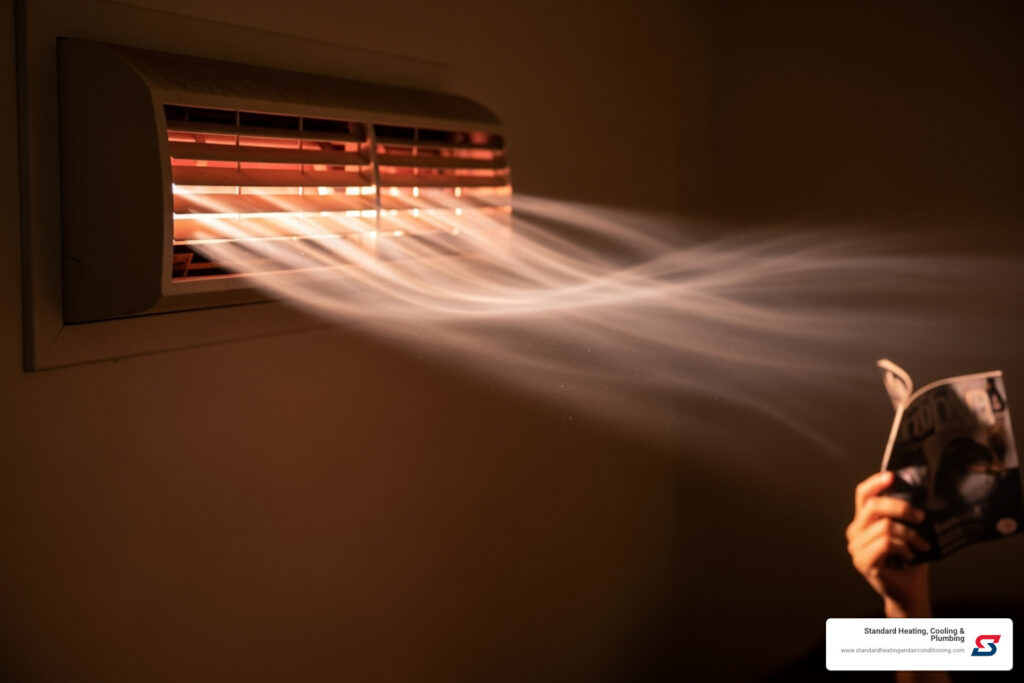
Nothing spoils summer comfort like your AC blowing hot air during Birmingham’s sweltering heat. This problem can stem from simple DIY fixes or serious system failures requiring professional attention.
Common reasons your AC blows hot air:
- Simple fixes – Wrong thermostat settings, dirty air filter, tripped circuit breaker
- System problems – Frozen evaporator coils, low refrigerant, clogged drains
- Major failures – Broken compressor, leaky ductwork, electrical issues
Quick diagnosis steps:
- Check if thermostat is set to “Cool” (not “Heat” or “Fan”)
- Inspect air filter – replace if dirty or clogged
- Look for tripped breakers in your electrical panel
- Feel for ice on indoor unit (indicates frozen coils)
Many homeowners can resolve basic issues in minutes. However, problems like refrigerant leaks or compressor failures need professional repair to safely restore your system’s cooling power.
Understanding why your AC stops cooling helps you decide between DIY fixes and calling for help. Some issues worsen when ignored, turning a simple repair into an expensive system replacement.
First-Response Troubleshooting: Simple Fixes You Can Do Yourself
Before worrying about expensive repairs, let’s tackle the most common reasons for an AC blowing hot air. You might be surprised to find a simple solution.
Most homeowners can resolve basic AC issues in minutes. These troubleshooting steps are your first line of defense against sweltering summer days. We’ve helped countless Birmingham families get their cool air back with these straightforward checks.
Check Your Thermostat Settings
It may seem too obvious, but your thermostat is a common culprit. Settings can be accidentally changed by family members or simply forgotten.
Start with the mode setting. Make sure your thermostat shows “Cool” – not “Heat” or “Fan Only.” Heat mode will warm your home, and fan-only mode just circulates air without cooling it.
Check your fan setting next. The fan should be set to “AUTO” rather than “ON.” When set to “ON,” your fan runs constantly, even when the AC isn’t actively cooling, which can make the air feel warm.
Verify your temperature setting is several degrees below your current room temperature. If your thermostat reads 75°F and you’ve set it to 76°F, your AC won’t turn on.
Double-check programmable schedules on smart thermostats. Pre-set programs can sometimes be incorrect, especially after power outages.
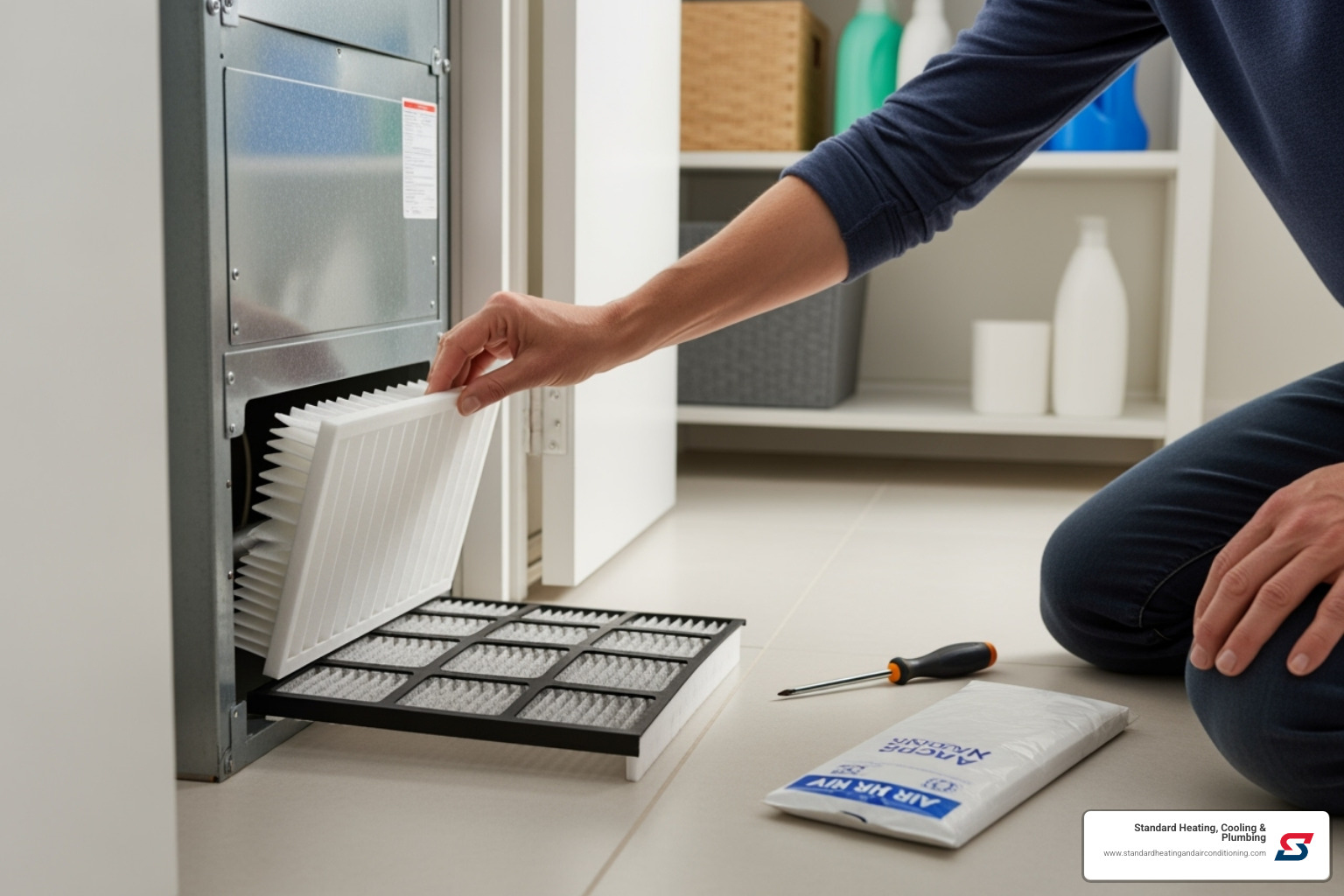
Inspect and Change Your Air Filter
A clogged air filter is another very common cause of an AC blowing hot air. This small component can bring your entire cooling system to its knees when it gets too dirty.
Think of your air filter as your AC’s lungs. When clogged with dust and debris, your system can’t breathe. Restricted airflow means less warm air reaches the evaporator coil, which needs that air to absorb heat effectively.
Dirty filters create a domino effect. Poor airflow can cause your evaporator coil to freeze, completely blocking heat transfer. Your AC works harder but accomplishes less, driving up energy bills.
Most filters need replacement every 1-3 months, but checking monthly is smart, especially for homes with pets, smokers, or allergy sufferers. How to check your filter provides detailed guidance on this essential maintenance task.
The filter location varies by system. When you find it, hold it up to the light. If you can’t see through it, it’s time for a replacement.
Examine Circuit Breakers and Vents
Two final quick checks can solve many cooling mysteries: your electrical panel and air vents.
Circuit breakers protect your AC but can trip during power surges or on extremely hot days. Your indoor fan might keep running while the outdoor unit shuts down, circulating warm air.
Check your electrical panel for any breakers in the “off” or middle position. AC systems typically have separate breakers for indoor and outdoor units. Reset any tripped breakers by switching them fully off, then back on.
Blocked vents sabotage your AC’s performance. Return vents need clear paths to pull warm air to your system, and supply vents must be unobstructed to deliver cool air.
Walk through your home and move furniture, rugs, or decorations away from all vents. Simple obstructions force your system to work much harder while cooling less effectively.
If these basic checks don’t restore your cool air, it’s time to investigate more complex system problems that typically require professional attention.
Why Your AC is Blowing Hot Air: Common System Problems
If the simple fixes don’t work, it’s time to look at more complex system problems. Understanding these issues helps you know when to call a professional. Catching them early can prevent major, expensive repairs.
The Problem of Frozen Evaporator Coils
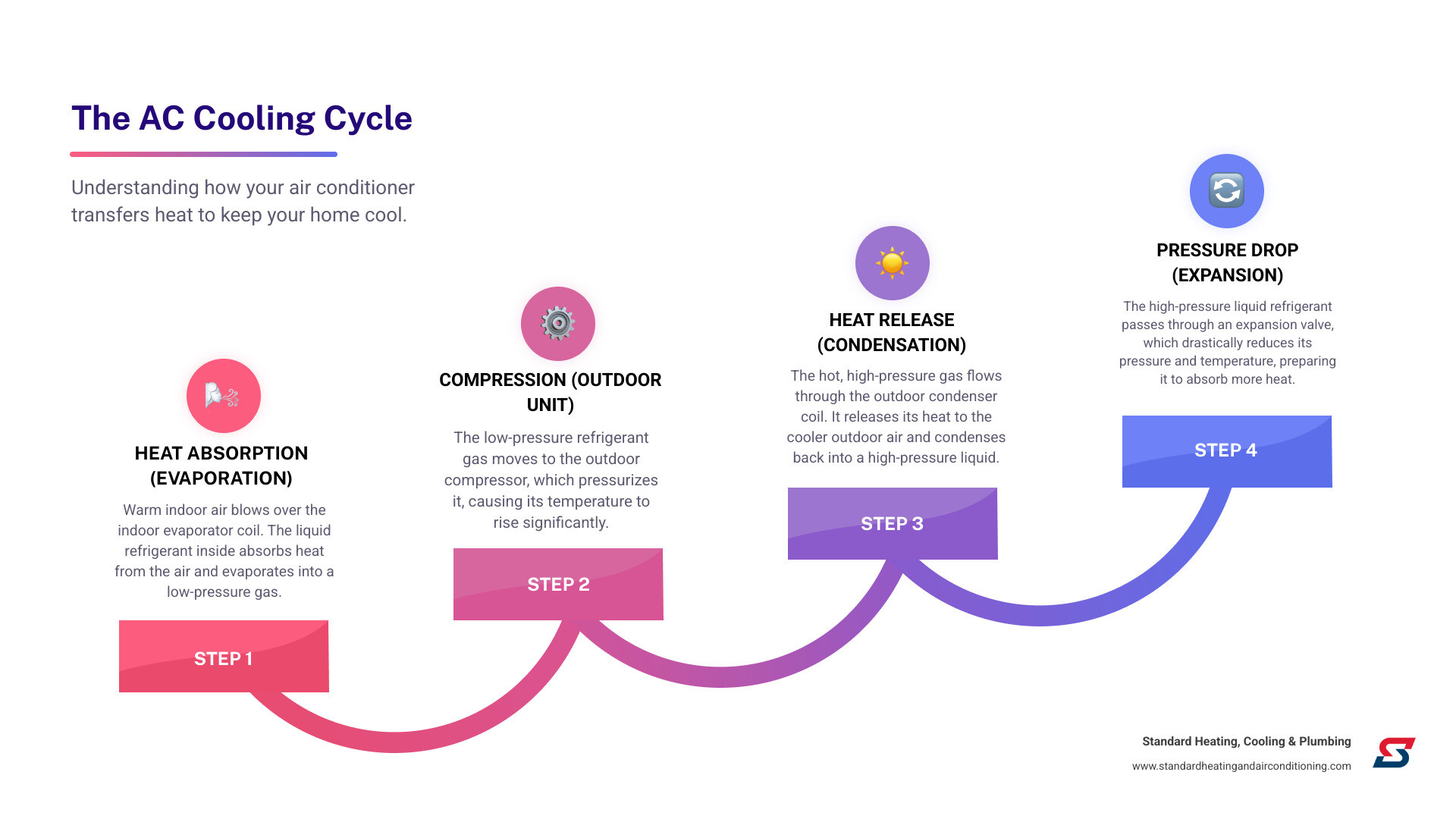
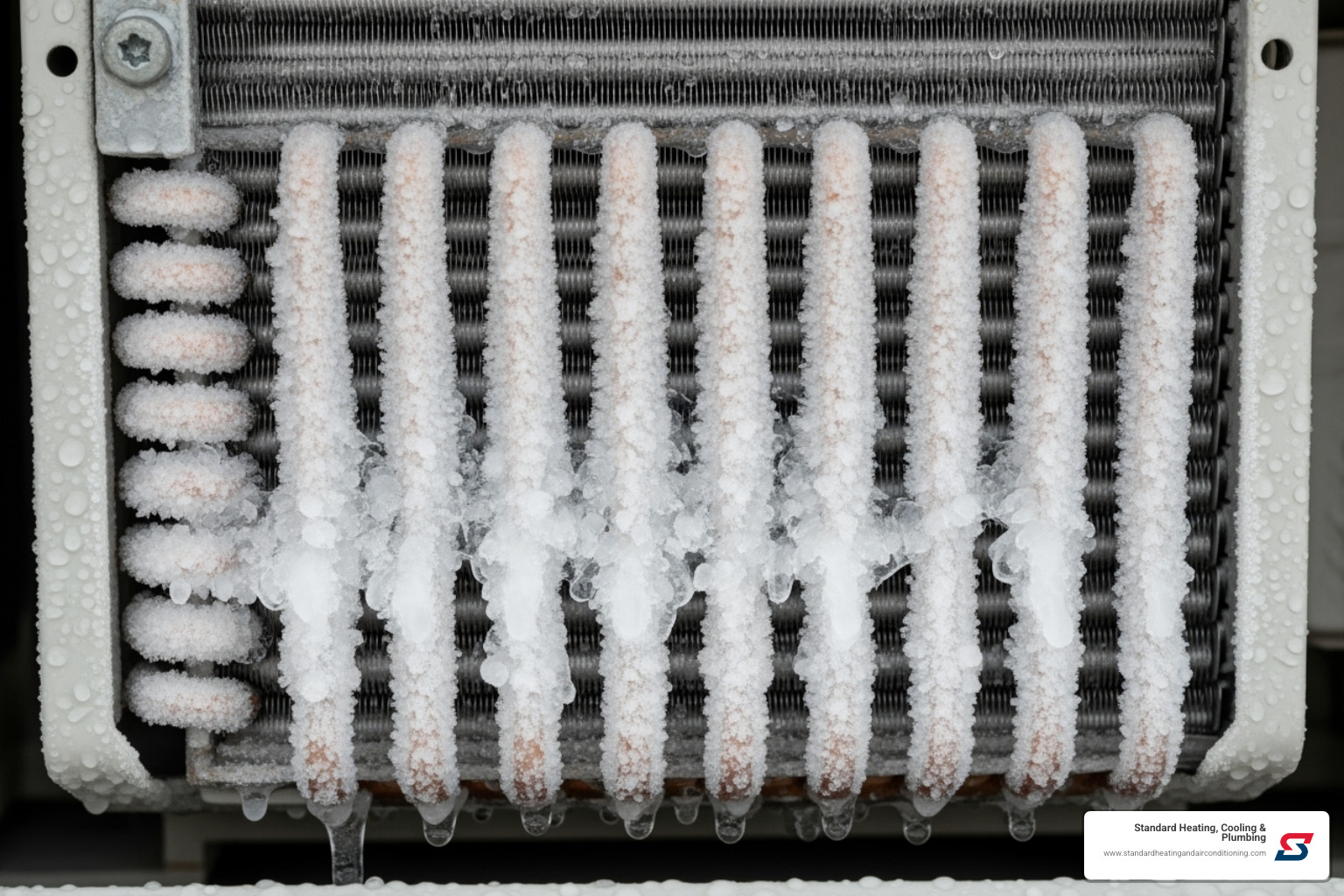
Finding ice on your AC on a hot day is puzzling, but frozen evaporator coils are a common reason for an AC blowing hot air. Your evaporator coils contain refrigerant that gets incredibly cold. When warm air from your home passes over these coils, heat is absorbed, and cool air flows back through your vents.
Trouble starts when this balance is disrupted. If the coils get too cold or don’t have enough warm air flowing over them, humidity freezes onto the coil surface. This ice buildup acts like an insulator, preventing the coils from absorbing heat.
Poor airflow is the biggest cause. A clogged air filter or blocked vents mean not enough warm air reaches the coils. Without adequate airflow, the coils get colder until ice forms.
Low refrigerant is another culprit. When refrigerant levels drop due to a leak, the pressure change makes the coils get even colder, creating perfect conditions for ice.
If you find ice on your indoor unit, turn off your AC at the thermostat. You can switch to “Fan Only” mode to help speed up thawing. Never chip away the ice, as you can damage the delicate coils.
Thawing can take several hours. Once melted, check your air filter and vents again. However, frozen coils are usually a symptom of a bigger issue. Ignoring the root cause can lead to compressor damage, the most expensive part to replace. How refrigerant coils work explains more about this process.
Low Refrigerant: A Common Cause of an AC Blowing Hot Air
Refrigerant is your AC’s lifeblood. When we find an AC blowing hot air, low refrigerant is often the villain.
Many homeowners don’t realize refrigerant isn’t “used up” like gas. It circulates in a closed loop. If your system is low on refrigerant, it means there’s a leak.
Simply adding more refrigerant isn’t a real solution; it’s like filling a leaky bucket. The leak must be found and fixed first, or the problem will return.
You might notice signs of a leak, like hissing or bubbling sounds or oily residue around refrigerant lines. The most obvious sign is your system’s inability to cool effectively.
Professional leak detection requires specialized equipment. Our technicians use electronic leak detectors to pinpoint where refrigerant is escaping. After repairing the leak, we recharge your system to the manufacturer’s specifications.
Working with refrigerant is not a DIY job. These chemicals require careful handling and specific certifications. Environmental regulations also govern refrigerant recovery and recycling, making it a job for trained professionals.
Dirty Coils and Clogged Drains
Your outdoor unit’s condenser coils release the heat absorbed from inside your home. When they get dirty from dust, grass clippings, and pollen, they can’t release heat efficiently. This insulating layer of grime makes the refrigerant stay warmer, reducing its ability to cool your indoor air.
The result? Your system works harder but can’t keep up, and you get warm air from your vents.
Regular cleaning of outdoor coils is crucial, but the fins are delicate. Professional maintenance includes careful coil cleaning that removes buildup without causing damage.
Another sneaky problem is a clogged condensate drain. Your AC removes humidity from the air, which condenses into water and flows out through a drain line. Over time, algae and sludge can create a clog. When the drain backs up, a safety switch in most modern systems detects the overflow and shuts down the cooling process to prevent water damage. Your fan might still run, but it will only blow warm air.
While minor clogs can sometimes be cleared with a wet/dry vacuum, recurring drainage problems usually point to deeper issues that need professional attention.
Major Component Failures: When to Suspect a Serious Issue
Sometimes, an AC is blowing hot air because of a major component failure. These complex repairs require professional expertise and go beyond simple DIY fixes.
Major component failures often develop gradually. Your AC might struggle on the hottest days, then slowly get worse until it only pushes warm air. Recognizing the warning signs early can save you from a complete system breakdown during Birmingham’s peak summer heat.
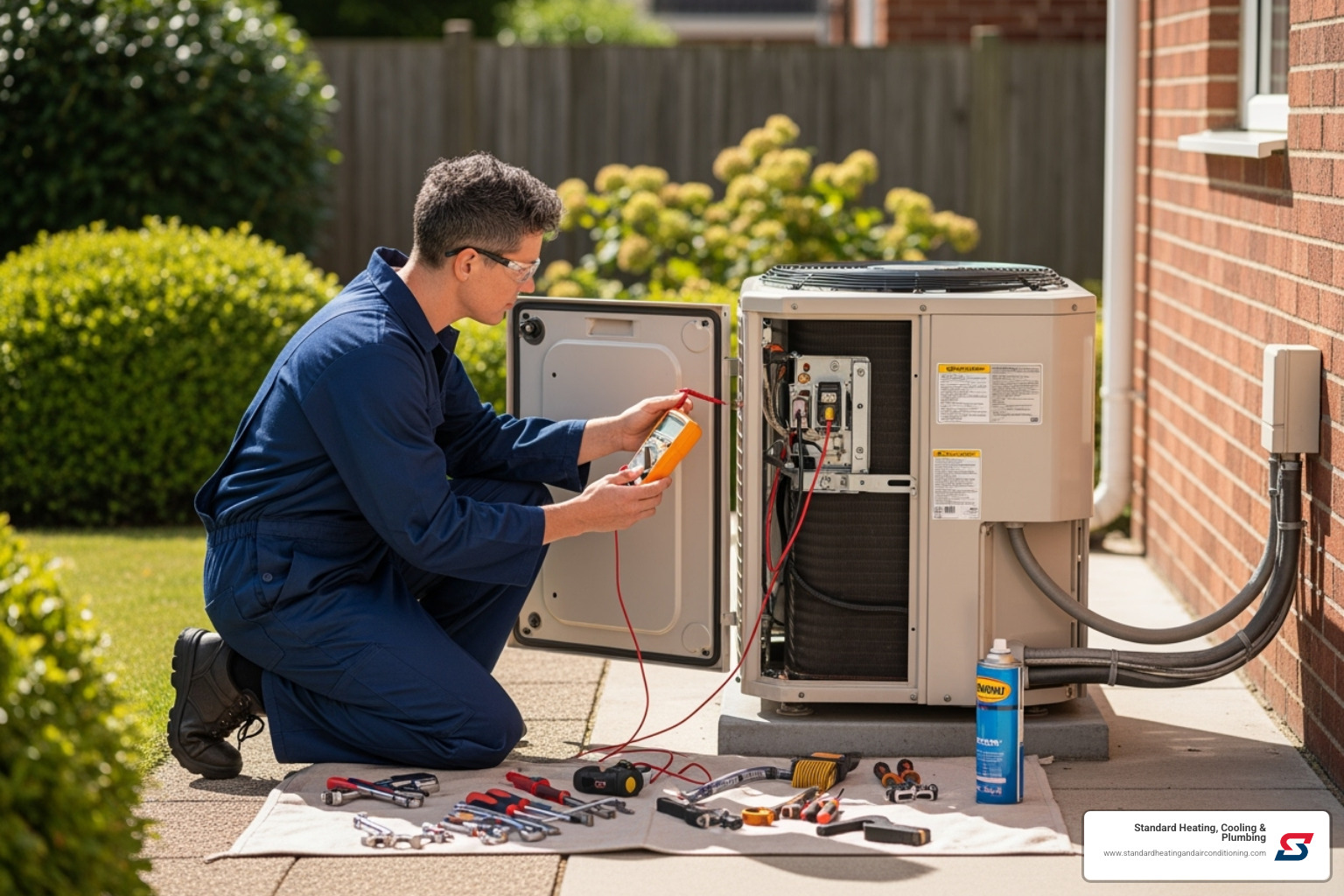
A Malfunctioning Compressor
Your compressor is the heart of your AC system. Located in the outdoor unit, its job is to pressurize and circulate refrigerant. When the compressor works, refrigerant moves correctly to absorb heat from your home and release it outside.
When a compressor fails, the entire cooling process breaks down. Refrigerant can’t circulate properly, and your AC is blowing hot air instead of cool.
The warning signs of compressor trouble are usually obvious. Grinding, clanking, or loud rattling noises from your outdoor unit are red flags. Sometimes the outdoor unit simply won’t turn on at all, even if the indoor fan is running. You might also notice your circuit breaker tripping repeatedly, as a failing compressor often draws too much power.
Compressor failures are typically the most expensive AC repair. For older units, replacing a failed compressor can cost almost as much as installing a new, more efficient system. Our technicians will help you decide if repair or replacement makes the most financial sense.
Leaky Ductwork and How It Contributes to an AC Blowing Hot Air
Your ductwork, mostly hidden in your attic or crawlspace, is the highway that carries cool air to every room. When that highway has leaks, your comfort suffers.
Leaky ductwork is a sneaky problem. Cracks, gaps, and poorly connected sections allow the cool air your AC produces to escape into your attic or crawlspace. At the same time, hot, humid air from those unconditioned spaces gets sucked into your ductwork, mixing with and warming the cool air before it reaches your vents.
The telltale signs of ductwork problems include uneven cooling throughout your home, with some rooms staying stubbornly warm. Your energy bills might creep higher as your system works overtime to compensate for the lost cool air. You might also notice your AC running constantly but never reaching the set temperature.
Professional duct sealing makes a dramatic difference. Our technicians use specialized equipment to locate and seal leaks, ensuring all the cool air your system produces makes it into your home.
Frequently Asked Questions about AC Issues
When your AC is blowing hot air, it’s natural to have questions. With 85 years of experience in Birmingham, we’ve heard them all. Here are answers to the most common ones.
Why does my AC unit freeze up even when it’s hot outside?
A frozen AC is usually a symptom of an airflow problem (like a dirty filter) or a refrigerant problem (a leak). The coils get too cold, and humidity in the air freezes onto them. This ice stops the unit from absorbing heat, resulting in it blowing warm air.
How often should I really change my air filter?
For most 1-inch filters, every 1-3 months is a good guideline. However, you should check it monthly and change it if it’s dirty. Homes with pets, smokers, or allergy sufferers may need to change filters more frequently, as a dirty filter is a top cause of an AC blowing hot air.
My AC is low on refrigerant. Can I just add more?
No, you should not just add more. Refrigerant operates in a closed loop and isn’t “used up.” If it’s low, it means there is a leak. A professional must find and repair the leak before adding more refrigerant to ensure a long-term fix, not a temporary band-aid.
Get Your Cool Air Back with Professional Help
It’s frustrating when your AC is blowing hot air, especially during a sweltering Birmingham summer. While some DIY fixes can solve simple problems, many AC issues require the expertise of a trained professional to diagnose and repair safely.
Attempting to fix complex problems like refrigerant leaks or electrical issues can cause more damage, void your warranty, or be unsafe. If your troubleshooting doesn’t restore your cool air, it’s time to call the experts.
When to call a professional:
- Your AC continues blowing warm air after checking the thermostat, filter, and breakers
- You notice ice buildup on your indoor unit
- Strange noises are coming from your outdoor unit
- The circuit breaker trips frequently
- There is uneven cooling throughout your home
At Standard Heating, Cooling & Plumbing, we’ve been keeping Birmingham families comfortable for 85 years. Our skilled technicians have seen it all. We are transparent about what’s wrong with your system and explain your options in plain English.
Preventative maintenance is your best defense against future problems. Our annual tune-ups catch small issues before they become expensive repairs, ensuring your system runs reliably.
We’re proud to serve Birmingham and surrounding communities, including Alabaster, Chelsea, Gardendale, Helena, Homewood, Hoover, Irondale, Mountain Brook, Pelham, Trussville, and Vestavia Hills. When you need diagnosing complex issues resolved correctly, our team has the experience and tools to get your home comfortable again.
Don’t spend another day sweating it out! Schedule your air conditioning service today and let our family take care of yours. We’re here to restore that cool air to your home so you can enjoy your summer.