

Why Quick Action Matters When You Find a Water Leak
A residential pipe leak fix can range from simple DIY patches to complex professional repairs, but acting fast is the key to preventing costly damage. Whether it’s a dripping faucet or a burst pipe, a quick response can save you thousands in water damage and repair costs.
Quick Fix Options for Common Pipe Leaks:
- Small holes or cracks – Apply epoxy putty or a pipe repair clamp.
- Joint leaks – Tighten fittings or wrap with self-fusing silicone tape.
- Burst pipes – Shut off water immediately and call a professional.
- Slow drips – Use temporary patches while scheduling a permanent repair.
The stakes are high. A pipe hole as small as 1.5 mm can waste up to 3,570 litres of water in 24 hours. Even worse, mold and mildew can begin growing just 24 hours after water exposure, turning a simple leak into a health hazard.
Water leaks account for over 10% of an average home’s water usage, with the average household leak wasting 180 gallons per day. The good news is that most residential pipe leaks can be temporarily fixed with basic tools while you arrange for a permanent solution.
Spotting the Sneaky Signs of a Pipe Leak
Some leaks are obvious, while others cause damage quietly behind the scenes. The key to any successful residential pipe leak fix is catching these problems early, before they cause major issues.
Obvious Indicators of a Leak
These signs are your home’s way of calling for help:
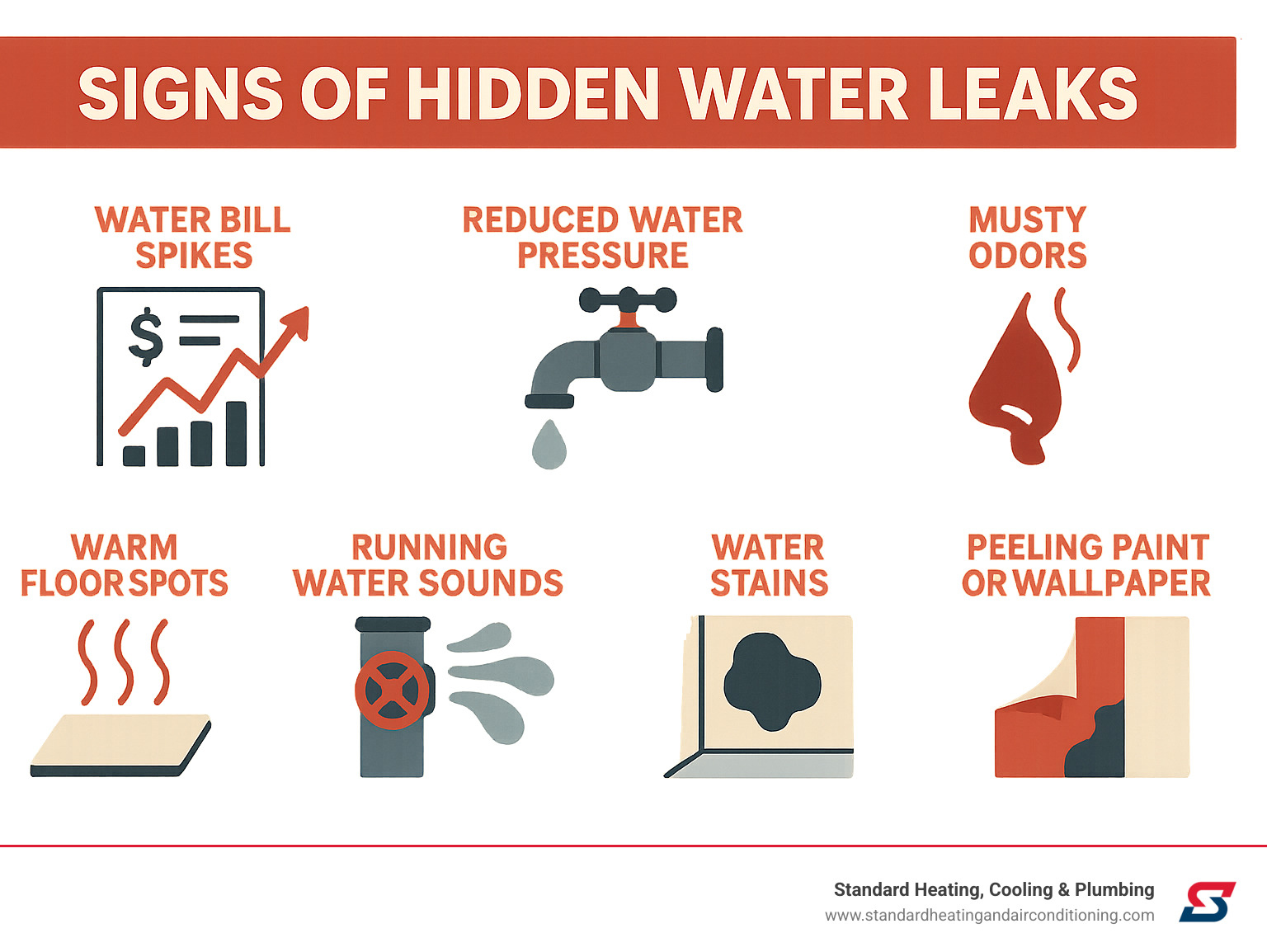
- Puddles: Standing water under sinks, around appliances, or on the floor is a clear sign of a leak.
- Dripping Sounds: That constant drip, drip, drip sound, especially when it’s quiet, points to a nearby leak, even if you can’t see it.
- Water Stains: Yellowish or brown marks on ceilings, walls, or floors indicate water is present where it shouldn’t be.
- Peeling or Warped Surfaces: Peeling paint, lifting wallpaper, buckling hardwood, or loose tiles are often caused by underlying moisture.
- Musty Odors: A damp, earthy smell is a strong indicator that mold and mildew are growing, which means a water source is feeding them.
- Visible Mold: Seeing black, green, or white fuzzy patches is proof that moisture has been present for some time.
Finding Hidden Leaks
Some leaks require more detective work to uncover:
- Sudden Spike in Water Bill: If your bill jumps without a change in usage, a hidden leak is a likely culprit. Learn more in our guide: High Water Bill: How to Spot a Hidden Leak Before It Costs You!.
- Reduced Water Pressure: A drop in pressure throughout your home can signal a significant leak in your main water supply line.
- Sounds of Running Water: Hearing water flowing when all faucets and appliances are off is a major red flag.
- Warm Spots on the Floor: A toasty section of your floor can indicate a hot water pipe leak underneath.
- The Water Meter Test: This is the definitive test. Turn off all water inside and outside your home. Record the reading on your water meter, wait 15-30 minutes without using any water, and check it again. If the numbers have changed, you have a leak. For more details, see our article on Detecting Water Line Issues.
First Response: What to Do When You Find a Leak
Finding a pipe leak is stressful, but the next few minutes are crucial for minimizing damage. Your quick thinking and immediate action can be the difference between a minor inconvenience and a major disaster. Safety first, then damage control.
Immediate Steps for Any Leak
No matter the size of the leak, follow these steps for every residential pipe leak fix situation:
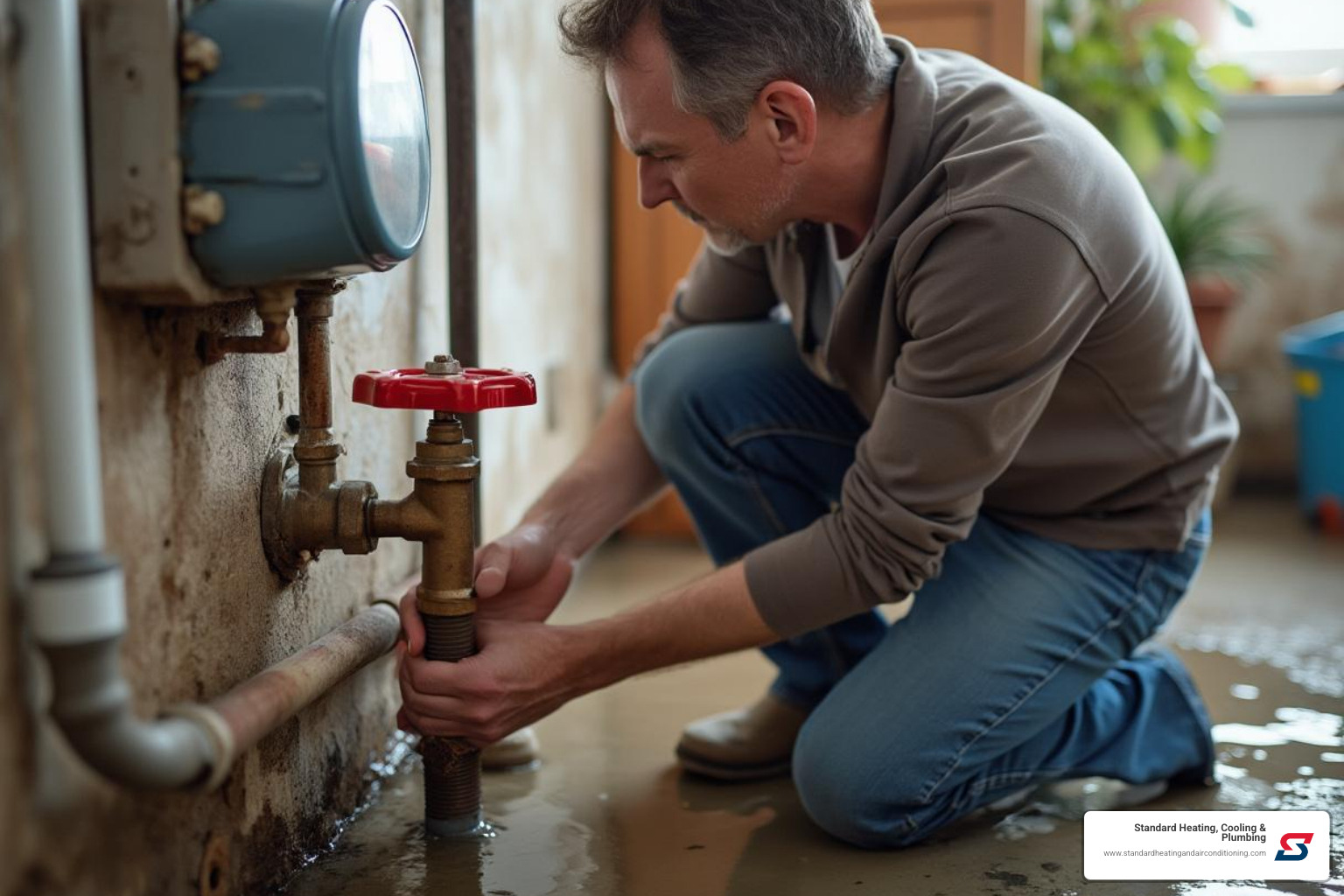
- Shut Off the Main Water Supply: This is the most critical step. Your main shut-off valve is usually in the basement, crawl space, or outside near the water meter. Turn it clockwise until it stops.
- Drain the Pipes: Open the lowest faucet in your house (like a basement sink or outdoor spigot) to relieve pressure and drain remaining water.
- Turn Off Electricity: If water is near outlets or appliances, turn off the power to the affected area at your electrical panel for safety.
- Document the Damage: Before cleaning, take photos and videos of the leak and any water damage for your insurance claim.
- Contain the Water: Use buckets, towels, and tarps to stop water from spreading.
For more detailed steps, see our guide on Emergency Plumbing Situations: What to Do Before the Pros Arrive.
Burst Pipe vs. Slow Drip Actions
Your response will vary based on the leak’s severity.
A burst pipe is an emergency. The high volume of water can cause catastrophic damage in minutes, leading to structural issues and mold. After shutting off the water, call a professional immediately. A burst pipe is not a DIY project.
A slow leak gives you more time but still requires urgent attention. A small drip can waste thousands of gallons and cause extensive hidden damage. Continue containing the water and schedule a repair appointment as soon as possible. Any temporary patch is just buying time, not a permanent solution.
DIY Temporary Fixes to Stop the Drip
After containing the immediate emergency, you may need a temporary fix to stop the drip until a professional residential pipe leak fix can be performed. These solutions are first aid for your pipes—they stop the immediate problem but don’t replace a permanent repair.
Before starting, gather your tools: a pipe clamp, epoxy putty, self-fusing silicone tape, a rubber patch, a screwdriver, and a wrench. Always ensure the water is off and the pipe is clean and dry before applying any patch.
DIY Temporary Residential Pipe Leak Fix Methods
-
Pipe Clamps: These are one of the most reliable temporary fixes. Pipe clamps use a rubber gasket to create a watertight seal over a small hole or crack. Place the rubber over the leak, wrap the clamp around it, and tighten the screws until the dripping stops. Be careful not to overtighten and crush the pipe.
-
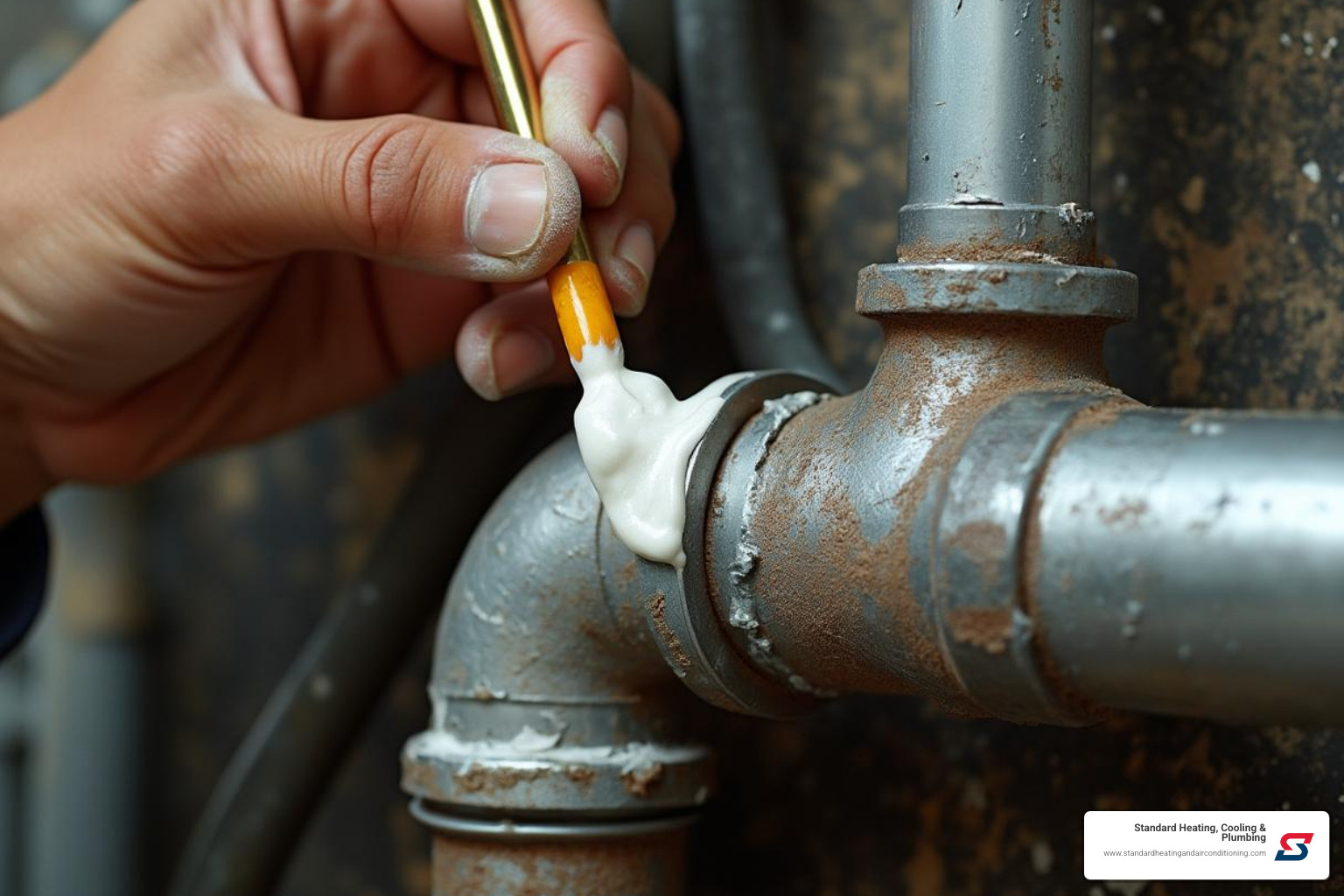
Epoxy Putty: For leaks near joints or in awkward spots, epoxy putty is an excellent choice. Knead the two-part putty until the color is uniform, then press it firmly over the leak, extending it at least an inch around the damaged area. Allow it to cure completely as directed before turning the water back on.
-
Self-Fusing Silicone Tape: This tape bonds to itself, not the pipe, creating a seamless waterproof layer. Starting an inch before the leak, stretch the tape tightly as you wrap, overlapping each layer. Continue wrapping until you are an inch past the leak. The tighter you pull, the better the seal.
-
Rubber Patch and Hose Clamp: In a pinch, you can create your own clamp. Cut a piece of rubber (from an old inner tube, for example) to cover the leak. Place it over the damaged area and secure it tightly with one or more hose clamps.
These are temporary measures. A permanent, professional residential pipe leak fix is necessary for a long-term solution.
Permanent Residential Pipe Leak Fix Solutions
Temporary patches are great in an emergency, but they aren’t designed to last. A permanent residential pipe leak fix is the only way to restore your peace of mind and protect your home from future water damage. Professional repairs are an investment designed to last for decades.
Repairing Copper and PVC Pipes
The right repair method depends on the pipe material.
-
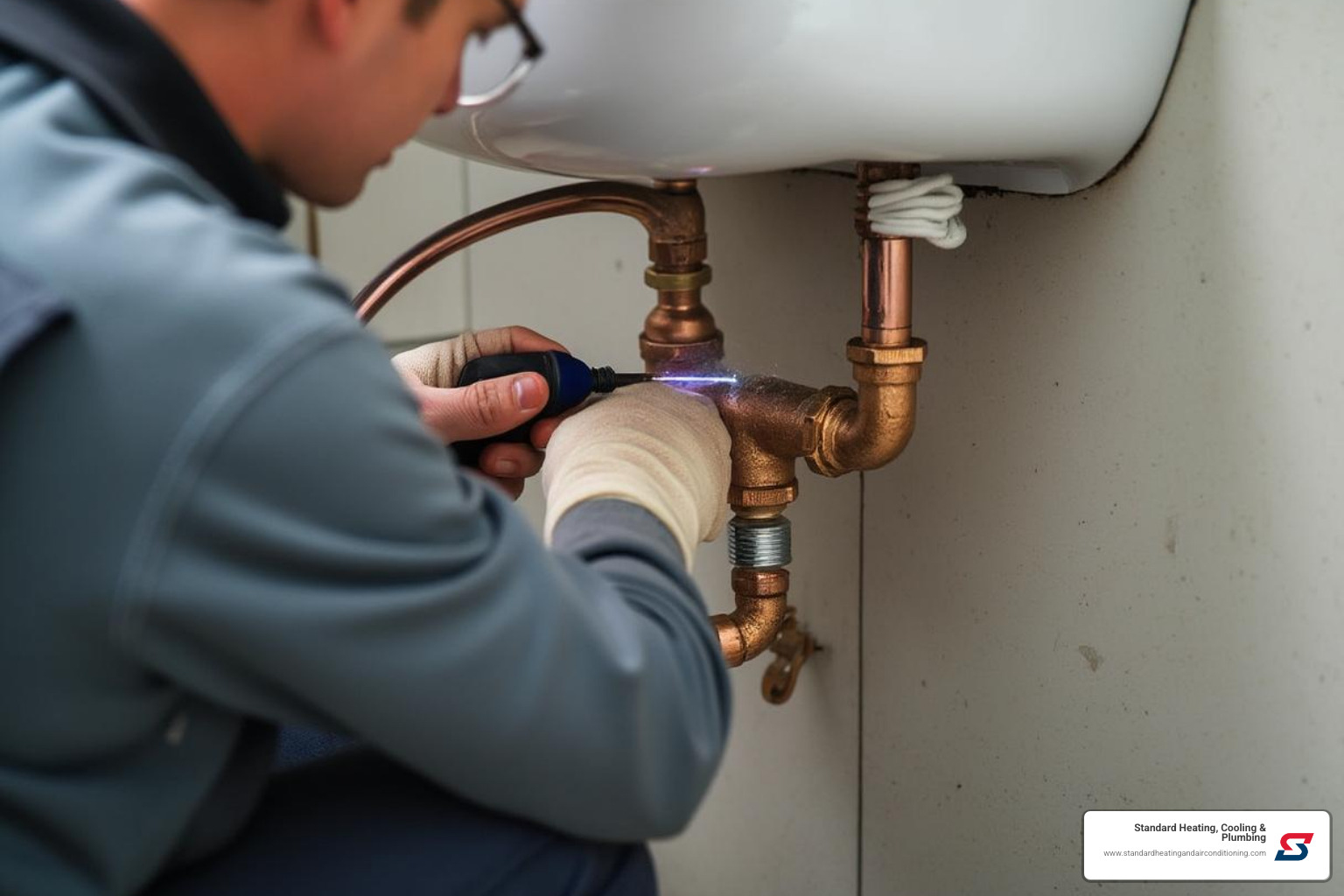
Copper Pipes: For durable copper pipes, soldering is the traditional repair method. A plumber cuts out the damaged section and uses a torch to solder a new piece in place, creating a joint that is often stronger than the original pipe. Compression fittings are a reliable, heat-free alternative that uses a nut and ring to create a watertight seal.
-
PVC Pipes: Repairing PVC pipes involves cutting out the damaged section and using PVC primer and cement to chemically weld a new piece and fittings in place. This process fuses the plastic together at a molecular level. Slip couplings are often used to make installation easier, especially in tight spaces.
When to Call in the Professionals
While some homeowners are skilled DIYers, certain situations always require a professional. Understanding Why a Professional Plumber Matters can save you from a costly mistake.
Call a professional for:
- Complex Leaks: Leaks behind walls, under concrete slabs, or in other inaccessible areas require specialized detection equipment.
- Leaks Inside Walls or Under Floors: These jobs involve more than just fixing a pipe; they require careful access, damage assessment, and restoration.
- Main Water Line Issues: These high-pressure lines can cause massive damage quickly and require specialized tools and expertise for Professional Water Line Repairs.
- Low Confidence in DIY Skills: If you’re unsure about the repair, it’s safer and often cheaper in the long run to call a pro. A botched repair can create a bigger problem.
- Risk of Structural Damage: If a long-term leak may have compromised your home’s structure, a professional assessment is crucial.
Preventing Future Pipe Problems
The best residential pipe leak fix is the one you never have to make. Proactive pipe maintenance can help you avoid most plumbing emergencies. You don’t need to be an expert to keep your pipes in good shape with a few simple habits.
Routine Maintenance Checklist
Follow this checklist to keep your plumbing system running smoothly:
-
Insulate Pipes: In unheated basements, crawl spaces, or exterior walls, foam insulation can prevent pipes from freezing and bursting. To keep your pipes safe, protection is key.
-
Let Faucets Drip During Extreme Cold: A small, steady drip keeps water moving through the pipes, preventing it from freezing solid.
-
Check Water Pressure: High water pressure (over 80 PSI) stresses your plumbing system. Aim for a pressure between 40-60 PSI. A pressure regulator can prevent leaks caused by high pressure.
-
Inspect Appliance Hoses: Regularly check hoses on your washing machine, dishwasher, and ice maker for cracks or bulges. Consider upgrading old rubber hoses to more durable braided stainless steel.
-
Address Slow Drains Promptly: A slow drain can indicate a blockage that is building pressure in your pipes. Don’t ignore it. Our guide on 5 Plumbing Habits to Leave in 2023 has more tips.
-
Know Your Shut-Off Valves: Ensure everyone in your home knows the location of the main water shut-off valve for emergencies.
-
Schedule Professional Inspections: An annual inspection by a professional plumber can spot potential issues like corrosion or loose fittings before they become major leaks.
Frequently Asked Questions about Pipe Leaks
When you’re dealing with a leak, you need answers fast. Here are the most common questions we receive about residential pipe leak fix situations.
Does homeowners insurance cover pipe leak repairs?
It’s complicated. Most policies cover water damage from sudden and accidental leaks, like a burst pipe. However, they often have a gradual damage exclusion, meaning they won’t cover damage from a slow drip you’ve ignored. Furthermore, a policy might cover the cost of replacing a damaged floor but not the cost of the actual pipe repair that caused the problem. The best course of action is a policy review; call your agent to understand your specific coverage before you have an emergency.
What are the long-term consequences of ignoring a leak?
Ignoring a leak always makes the problem worse and more expensive. The consequences can be severe:
- Structural Rot: Water weakens wooden beams, floor joists, and wall studs.
- Foundation Damage: Leaks near or under your foundation can erode soil, leading to cracks and shifting.
- Chronic Mold and Mildew: Mold can grow within 24 hours of water exposure and poses a serious health risk.
- Pest Infestations: Damp areas attract cockroaches, termites, and other pests.
- Increased Utility Costs: Even a pinhole leak can waste thousands of gallons of water per year, significantly increasing your water bill.
How does a professional find a leak inside a wall?
Modern plumbers use advanced, minimally invasive technology to locate hidden leaks without destroying your walls.
- Acoustic Sensors: These specialized listening devices can hear the sound of water escaping from a pipe, even behind drywall.
- Infrared Cameras: These cameras detect temperature differences. A hot water leak will show up as a cool spot, while a cold water leak can appear as a warm spot due to evaporation.
- Moisture Meters: These tools scan walls and floors to measure moisture content, helping to map the full extent of the water damage.
These minimally invasive techniques allow us to pinpoint the exact location of a leak, so we only need to make a small, precise opening for the repair. This saves you time, money, and the stress of a major demolition project.
Don’t Wait for Water Damage – Get a Permanent Fix
Ignoring a pipe leak will always cost you more in the long run. While DIY patches can provide a temporary stopgap, they are not permanent solutions. The constant pressure, temperature changes, and normal wear will eventually cause the patch to fail, leading to more damage.
Professional expertise ensures both safety and lasting results. When you call an experienced plumber, you’re investing in a proper diagnosis, quality materials, and skilled craftsmanship that addresses the root cause of the leak.
At Standard Heating, Cooling & Plumbing, we’ve been solving Birmingham’s plumbing problems for 85 years. We’ve seen every type of pipe leak imaginable and bring the right tools, knowledge, and commitment to every job.
We serve Birmingham, Alabaster, Chelsea, Gardendale, Helena, Homewood, Hoover, Irondale, Mountain Brook, Pelham, Trussville, Vestavia Hills, and the surrounding communities. Our dedication to quality and customer satisfaction has been our foundation for nearly a century.
Don’t let a small leak turn into a big headache. For a reliable and expert residential pipe leak fix in the Birmingham area, contact us today. We’ll get the job done right the first time, so you can get back to enjoying your home without worry.